
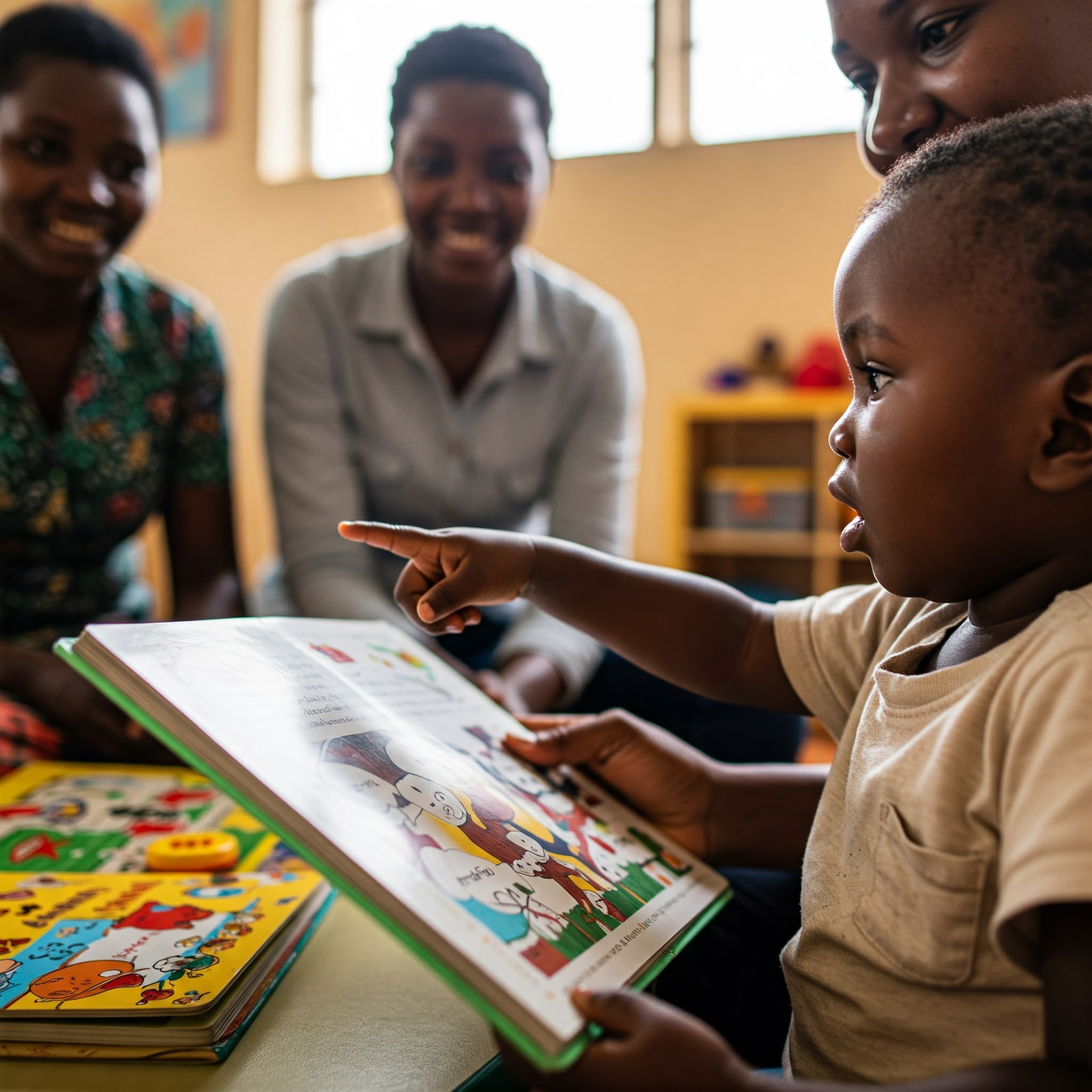
Maya didn’t point.
She didn’t gesture.
Didn’t wave.
Didn’t hold her arms out when she wanted to be picked up.
At 18 months, other toddlers were reaching toward toys, dragging grown-ups by the finger, throwing their chubby hands into the air to say “Look!”
But not Maya.
If she wanted something, she’d lean in silence.
If she was upset, she’d scream.
Sometimes, she’d just sit — still, quiet, eyes locked on a spinning wheel or flickering shadow — and I’d wonder if she even saw me at all.
At first, people told us not to worry.
“She’s just independent.”
“She’s a thinker.”
“Some kids talk before they point.”
But deep down, I knew.
I felt it in my bones —
that ache only parents know,
the one that whispers, “Something’s missing.”
The day our pediatrician gently said the word “evaluation,” I nodded with a smile I didn’t mean.
My hands were cold.
My heartbeat thundered in my ears.
I had no idea where this road would lead.
The first few therapy sessions were… hard.
Maya didn’t make eye contact.
Didn’t respond to her name.
Didn’t imitate.
Didn’t seem to notice when Miss Jess, her speech therapist, tried to play peekaboo.
But Miss Jess didn’t give up.
She brought bubbles.
Wind-up toys.
Feathers.
And the gentlest patience I had ever seen.
“She doesn’t need to talk yet,” she told me.
“We just need her to show us what she wants.”
So we practiced.
We played with light-up toys and waited.
We paused snack time until she looked.
We held out two objects and whispered, “Which one, Maya?”
Nothing.
Day after day.
Week after week.
And each time she didn’t respond, I felt a tiny crack deepen in my heart.
I wanted to believe.
I really did.
But how do you keep hoping when every tiny step feels like a thousand miles away?
Then one Tuesday —
a cloudy, ordinary Tuesday —
something changed.
Miss Jess was holding a toy that lit up and played music.
Maya had taken a liking to it the day before — not a smile, not laughter, but she’d reached for it with her eyes.
“Maya,” Jess said softly, kneeling beside her.
“You can tell me.”
She paused.
Waited.
I held my breath from the side of the room, trying not to move, not to wish too hard.
And then —
with a tiny, trembling hand —
Maya raised her index finger
and pointed.
Right at the toy.
It wasn’t perfect.
Her finger wobbled.
Her arm was stiff.
She didn’t look at us.
But it was a point.
The first.
The bridge between silent need and shared experience.
Miss Jess gasped, smiling so wide I thought she might cry.
I already was.
I clapped a hand over my mouth to muffle the sob that rose up —
a sob made of sleepless nights, therapy forms, whispered fears,
and one fragile moment of connection.
We played it again.
Maya pointed again.
And again.
Over the next week, she pointed to bubbles.
To crackers.
To her shoes.
Each time, the gesture got stronger.
More confident.
Sometimes she even looked at me first —
just a flicker of eye contact
before pointing to the thing she wanted.
I started carrying pictures in my pocket,
just in case she wanted something and couldn’t find the words.
We weren’t chasing speech anymore.
We were building communication.
One night, I was sitting with her on the living room floor.
The same floor where I had once cried into my knees, wondering if she’d ever say “Mama.”
She was flipping through a board book, one she’d ignored a hundred times before.
She stopped on a picture of a cat.
Paused.
Then turned to me —
met my eyes —
and pointed.
I didn’t even know she knew what a cat was.
“That’s right,” I whispered.
“That’s a kitty!”
And I swear —
for just one second —
she smiled.
Maya still doesn’t talk much.
But she points.
She gestures.
She leads my hand to things she wants me to see.
And every time she does,
it feels like a thread —
delicate but strong —
pulling us closer together.
I used to think communication meant words.
Now I know better.
Communication is choosing to reach out,
even when you’re not sure what you’ll find on the other side.
Maya taught me that.
With one small finger.
One brave little point.
And a world of meaning behind it.