
Liam didn’t talk much.
Not at school.
Not at the park.
Not even when another child offered him a toy.
He’d simply look away, twist his fingers, and retreat into his own quiet space.
Other parents called him “shy.”
Some called him “polite.”
But I knew.
He wasn’t avoiding others to be rude — he was afraid.
Afraid of being misunderstood.
Afraid of saying the wrong thing.
Afraid of not knowing what to do when a child said, “Wanna play?”
I watched him from the bench as he stood on the playground’s edge — always near, never in.
Until one day, he tugged on my sleeve and whispered, “Can someone teach me?”
It broke me.
Because he didn’t mean schoolwork.
He meant friendship.
Connection.
Belonging.
That week, we started social skills therapy.
We practiced at home with puppets.
We watched videos of kids playing and pressed pause — “What do you think she’s feeling here?”
We role-played asking someone to join a game.
But the real shift didn’t come until he met his therapist, Anna.
She never pushed.
Never forced him to speak.
She just played — quietly, patiently.
And Liam, slowly, followed her lead.
Week by week, he began to look up more.
Smile more.
Say “hi” more often — even if it was barely a whisper.
Then came the playground test.
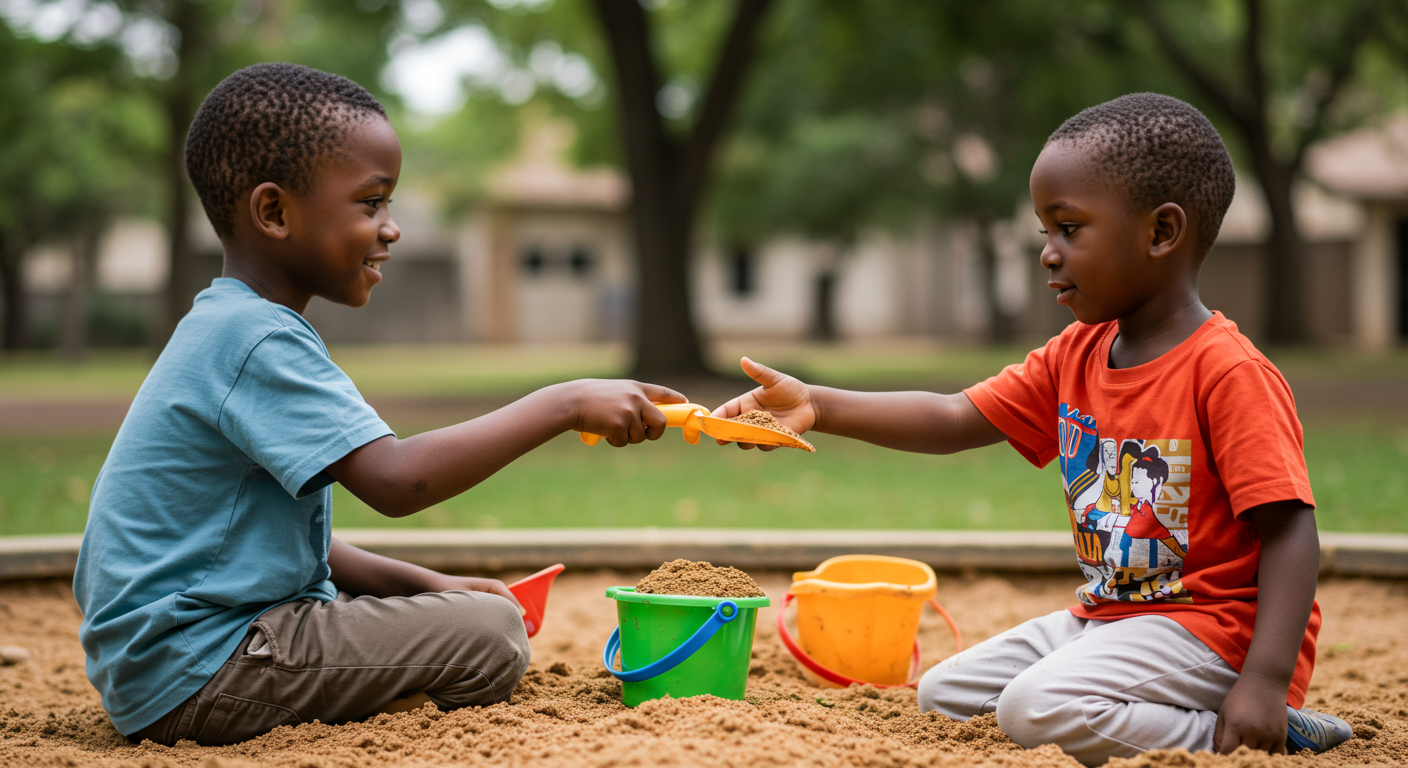
He spotted a boy building a sandcastle alone.
He turned to me, uncertain.
I didn’t say a word.
I just nodded.
He walked over.
Paused.
Then said, “Can I help?”
The boy smiled and handed him a shovel.
And just like that, Liam had his first real friend.
I cried behind my sunglasses.
Because it wasn’t just a moment.
It was a milestone.
Today, Liam still gets nervous around crowds.
He still hesitates sometimes.
But he knows how to try.
He knows what to say.
And more than anything — he knows he belongs.