
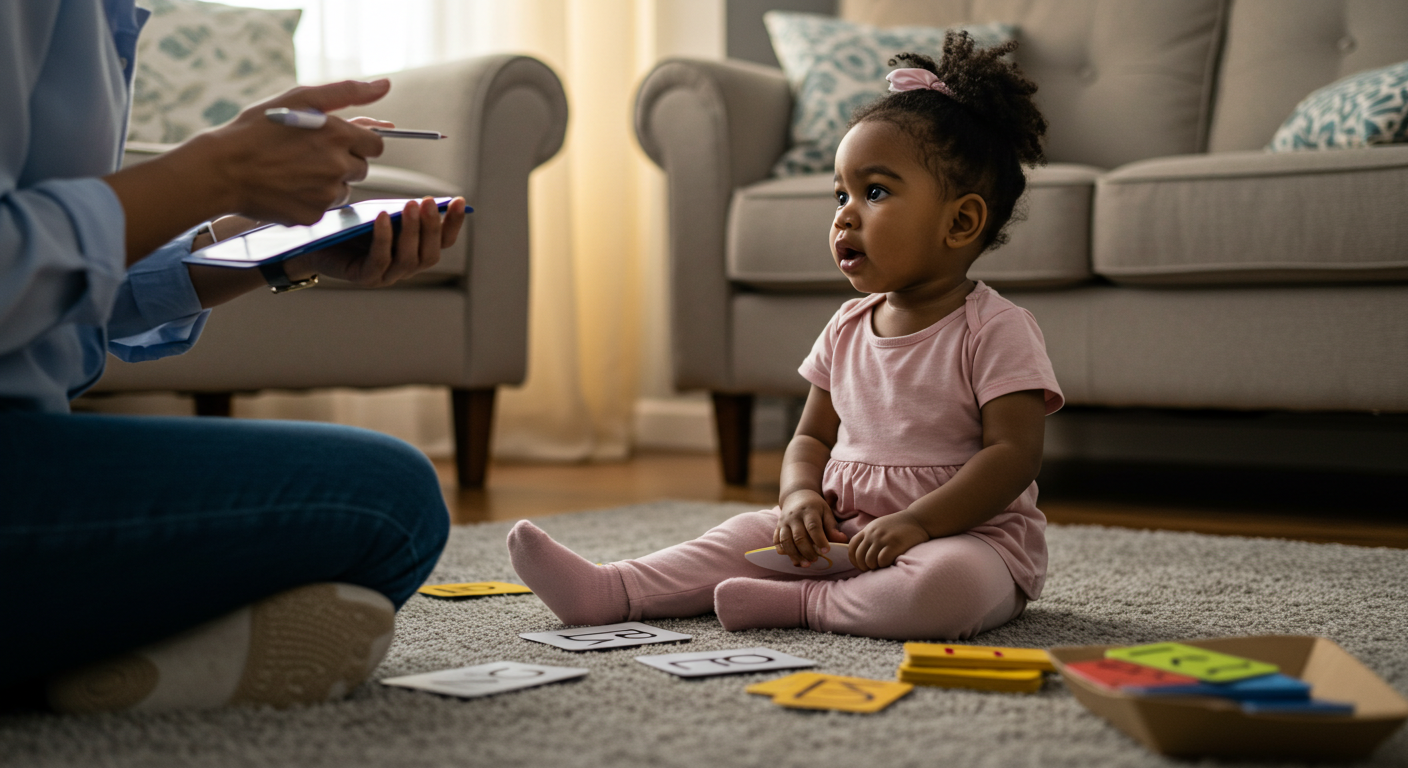
We used to measure Ella’s milestones by silence.
The moments when words didn’t come.
She was two years old and had never said “Mama.”
Not even a babble.
Just eyes — deep, searching eyes — and hands that reached but didn’t point.
People told us not to worry.
“She’s just quiet.”
“Some kids are late talkers.”
But deep down, I knew.
I knew the silence meant something more.
We tried everything.
Songs. Flashcards.
Even whispered stories at bedtime, hoping they’d echo back to us.
But they didn’t.
Then we heard about early intervention.
Speech therapy. ABA. A team that didn’t promise miracles, but something better — support.
Ella began therapy at two and a half.
At first, she cried through every session.
New people. New routines. New expectations.
And still… no words.
But her therapist never stopped believing.
She used sign language.
Picture cards.
Songs with rhythm and rhyme.
Ella started clapping on cue.
Then pointing.
Then matching symbols to things she loved — apples, swings, bubbles.
And then one afternoon, in the middle of a game with her therapist, she looked up and said,
“Up.”
Just one word.
Tiny.
Barely a whisper.
But it shook the ground beneath us.
After that came “ball,” “more,” “go.”
Words spilled slowly — like drops from a tap that had been stuck for too long.
They weren’t perfect.
Some were unclear.
Some needed prompting.
But they were hers.
Her voice.
Her choices.
Her way of finally telling us who she was.
Now, at four, Ella sings along to lullabies.
She calls for her favorite snack.
She says “I love you” — not just with her eyes, but with her voice.
And every word still feels like a miracle.
Because in the beginning, we measured milestones by what she couldn’t say.
Now, we measure them by every sound that fills our home with her voice.